Where deep time meets living legend
At Giant's Causeway, science explains the stones and folklore gives them a soul, and both stories still travel together on the wind.
Table of Contents
A coastline born from fire
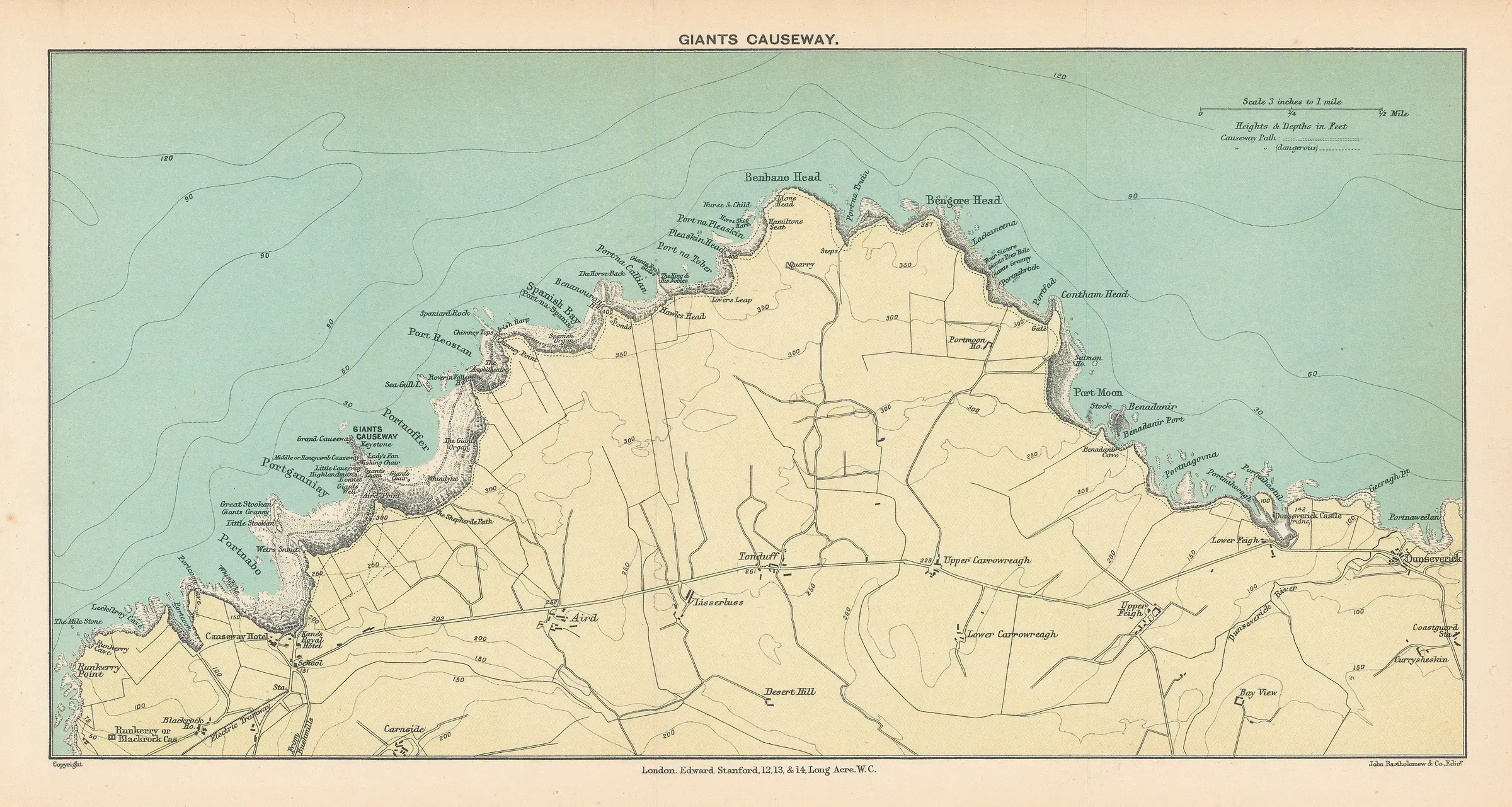
Long before maps named this corner of County Antrim, immense volcanic activity transformed the region. Around sixty million years ago, during the Paleogene period, molten basaltic lava spread across broad surfaces and cooled in successive flows. What looks today like a carefully engineered stone terrace was, in origin, a violent natural process: fire meeting air, pressure releasing in stages, and rock contracting as heat escaped. Over vast stretches of time, those events produced the layered volcanic foundation of the coast and set the stage for the geometric forms visitors now recognize instantly.
Seen from a modern trail, the Causeway can feel almost architectural, but that sense of design emerges from physical laws rather than human planning. Cooling rock contracts, fractures, and organizes itself into polygonal columns, most famously hexagons, because that pattern efficiently distributes stress. The result is both technical and poetic: a shoreline where chemistry, temperature, and time collaborated to create one of the world's most iconic natural pavements.
How the basalt columns formed
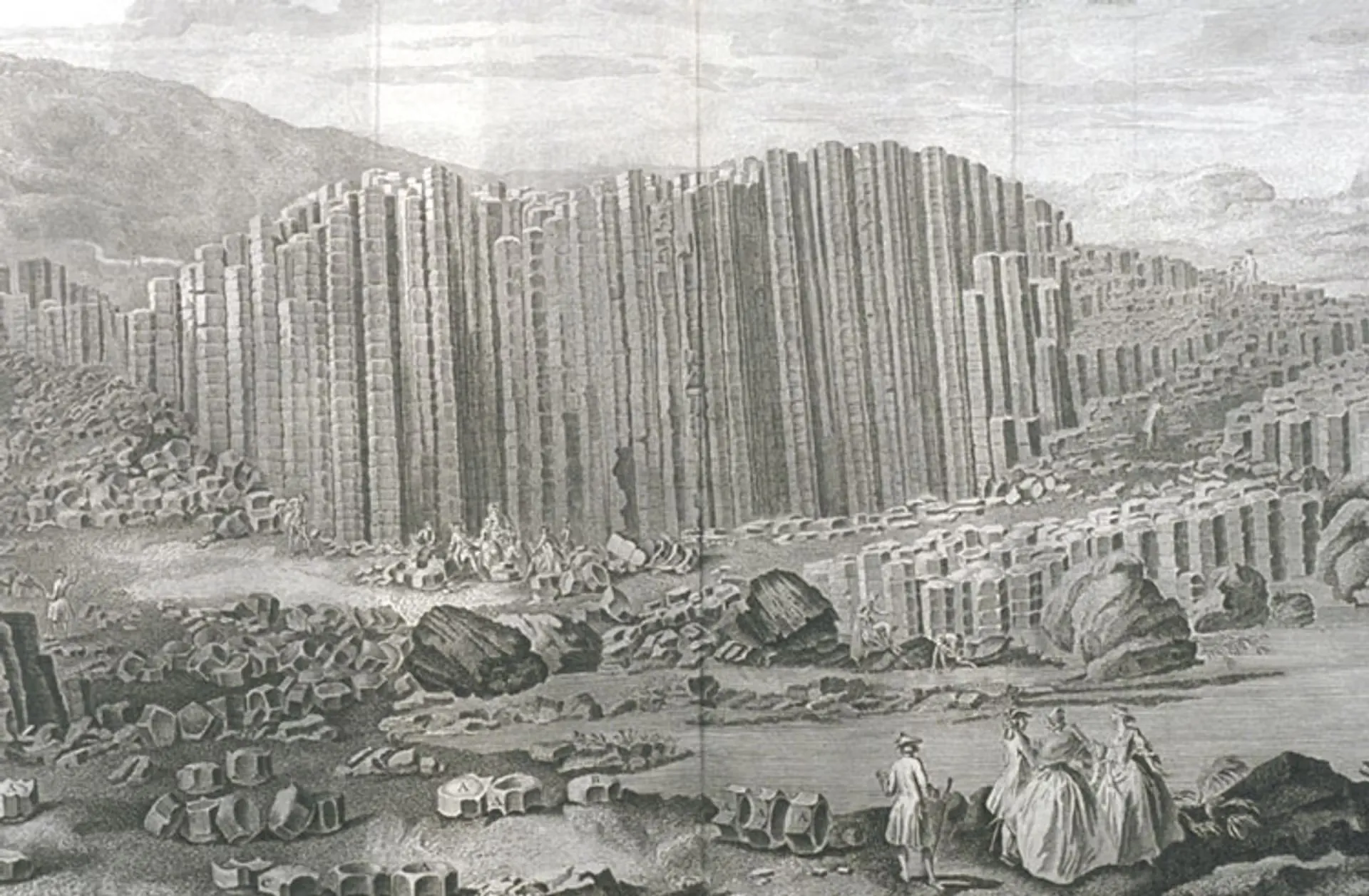
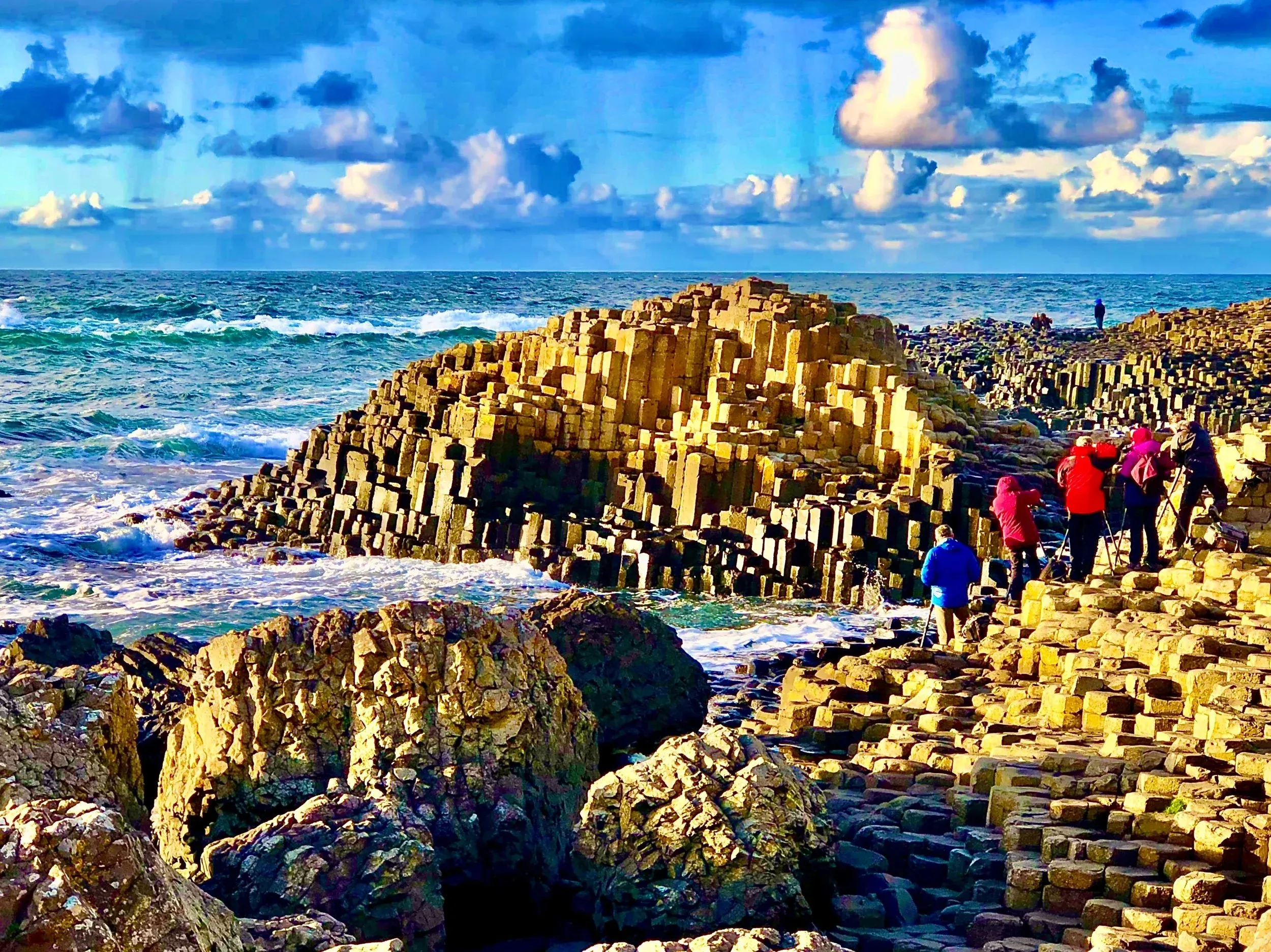
The columns formed as thick lava flows cooled from the top and bottom inward, causing tensile stress that cracked the rock into repeating shapes. Although hexagons are the signature form, pentagons and heptagons also appear, reminding us that nature rarely works as a perfect grid. Column height and profile vary by location, and certain formations show dramatic step-like structures where different cooling rates and erosional patterns overlapped through time.
One of the most fascinating details is that the columns are not just a surface effect. They continue downward as part of deeper basalt structure, while wind, rain, and wave action gradually reveal and reshape the visible edges. In practical terms, every visit is slightly different: changing light, wet stone sheen, tidal movement, and seasonal vegetation all alter how the geometry reads to the eye.
Finn McCool and the giant's road
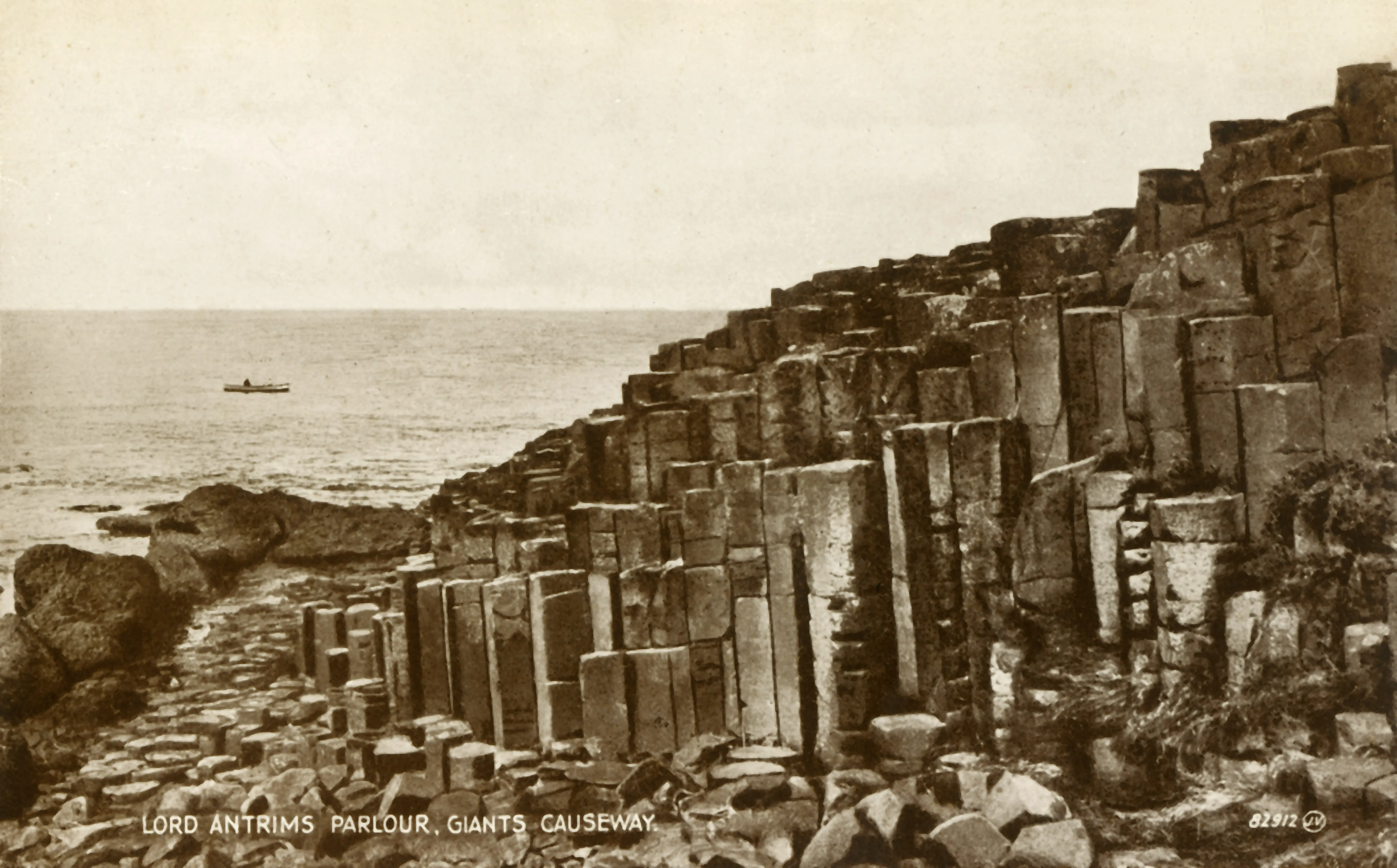
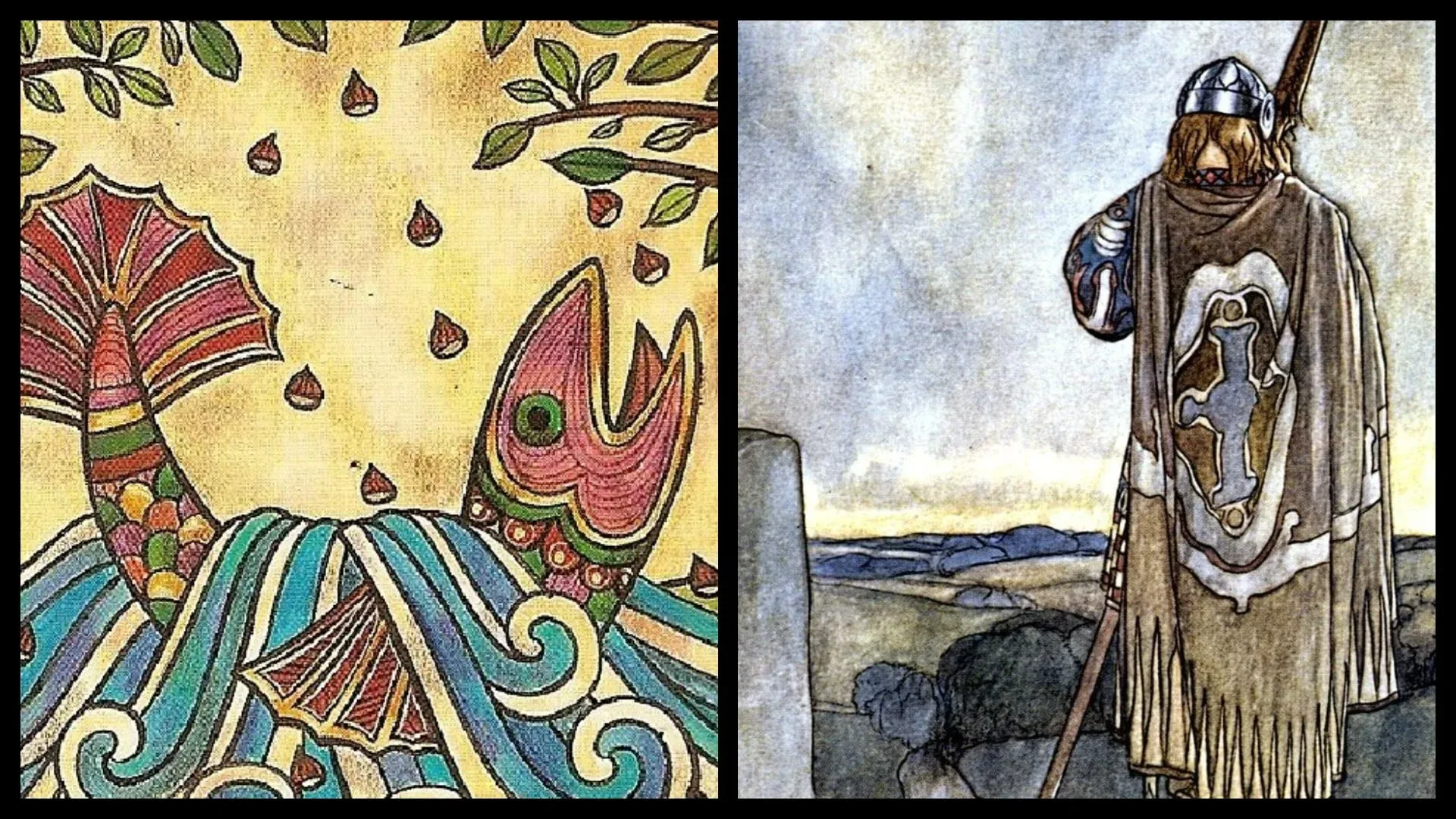
Alongside geology lives one of Ireland's best-known legends: the tale of Finn McCool, the giant hero who built a stone path across the sea toward Scotland to challenge his rival Benandonner. In one version, Finn's wife Oonagh outsmarts the rival by disguising Finn as a baby, convincing Benandonner that if the child is that large, the father must be enormous. Terrified, the rival flees and tears up the causeway behind him.
Whether told around kitchen tables, by local guides, or in children's books, the legend adds emotional texture to the place. It does not compete with scientific explanation; instead, it complements it by giving visitors a cultural language for awe. People may arrive for the basalt, but they often remember the Causeway through stories, voices, and the humor of a giant tricked by family cleverness.
First visitors and early accounts
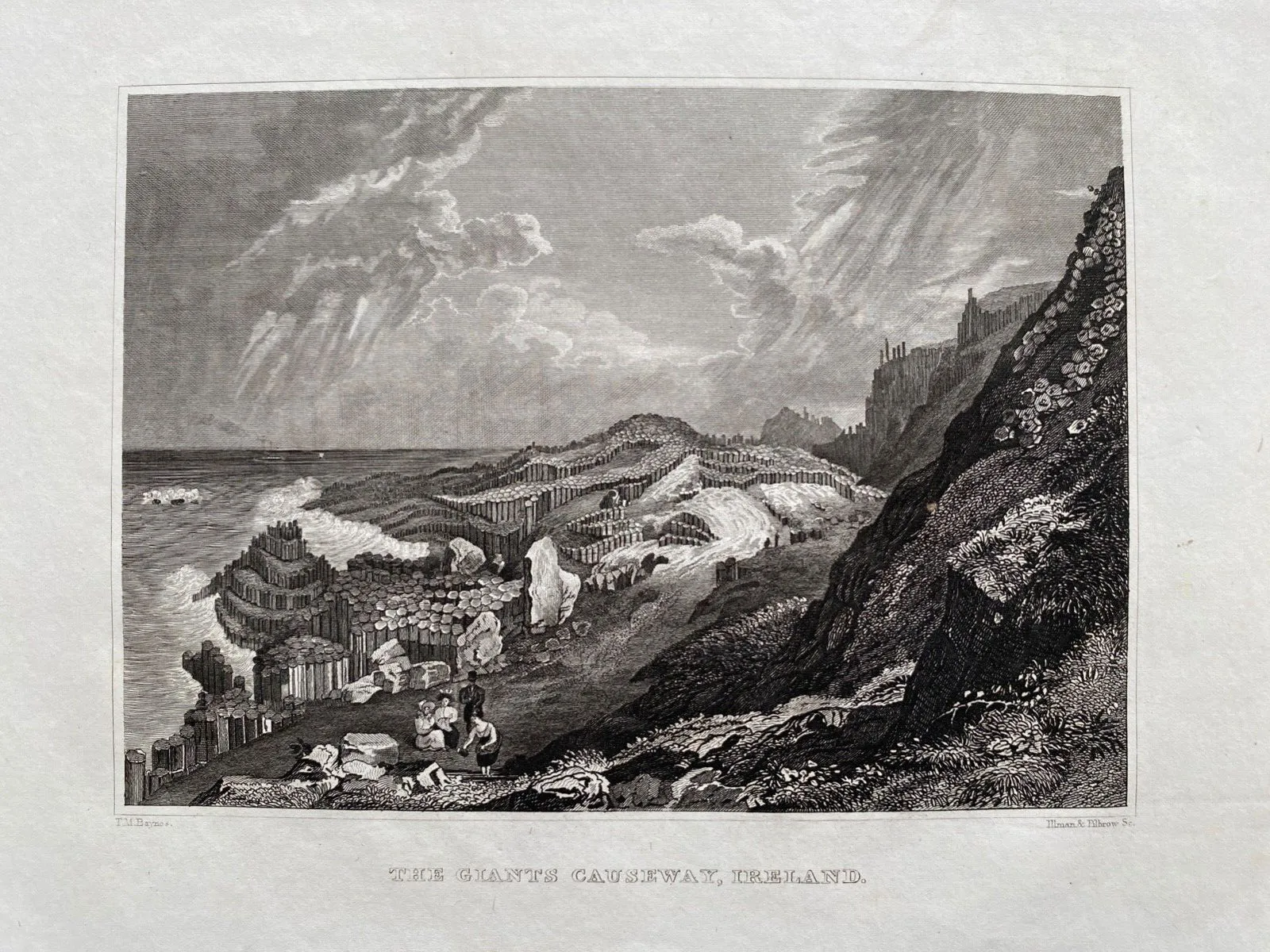
By the seventeenth and eighteenth centuries, travelers, artists, and scholars began recording the Causeway in journals and sketches. Reaching the site was far less straightforward than today: roads were rough, weather could shut routes quickly, and local knowledge mattered. Yet the effort itself reinforced the destination's reputation. Those who arrived wrote with a mixture of disbelief and admiration, often describing the stones as too regular to be natural.
These early impressions helped spread the Causeway's fame beyond Ireland. Prints circulated across Britain and Europe, and the site became a touchpoint in growing debates about how landscapes form. In that way, Giant's Causeway entered both popular imagination and scientific discussion at nearly the same moment.
Scientific debate in the 18th century
During the Enlightenment, the Causeway became a stage for competing geological theories, especially arguments between Neptunists and Plutonists about the origins of rock. Some scholars believed basalt precipitated from ancient oceans, while others argued it came from volcanic processes. Sites like Giant's Causeway provided concrete evidence that could be observed, measured, and compared.
Over time, volcanic interpretations gained strength, supported by field observations from multiple regions with similar basalt structures. The Causeway's columns, once framed mainly as a curiosity, became important data in the broader development of modern earth science. Today, standing on those stones, visitors are walking across a landscape that helped shape the scientific method itself: observe closely, test ideas, revise conclusions.
Victorian travel and coastal tourism
In the nineteenth century, improved transport and changing leisure culture brought more visitors to the Causeway Coast. Rail links to nearby towns and the expansion of hospitality services made multi-stop coastal trips increasingly popular. Guidebooks began to standardize routes, viewpoints, and recommended timings, turning what was once an adventurous expedition into a more structured excursion.
Victorian travelers often combined natural interest with social ritual: promenades, sketching, letter-writing, and shared viewing points. Their habits helped establish the template still familiar today, a journey that blends scenic movement, narrative interpretation, and pauses for reflection. The modern visitor experience owes more to this era than many people realize.
Conservation and heritage protection
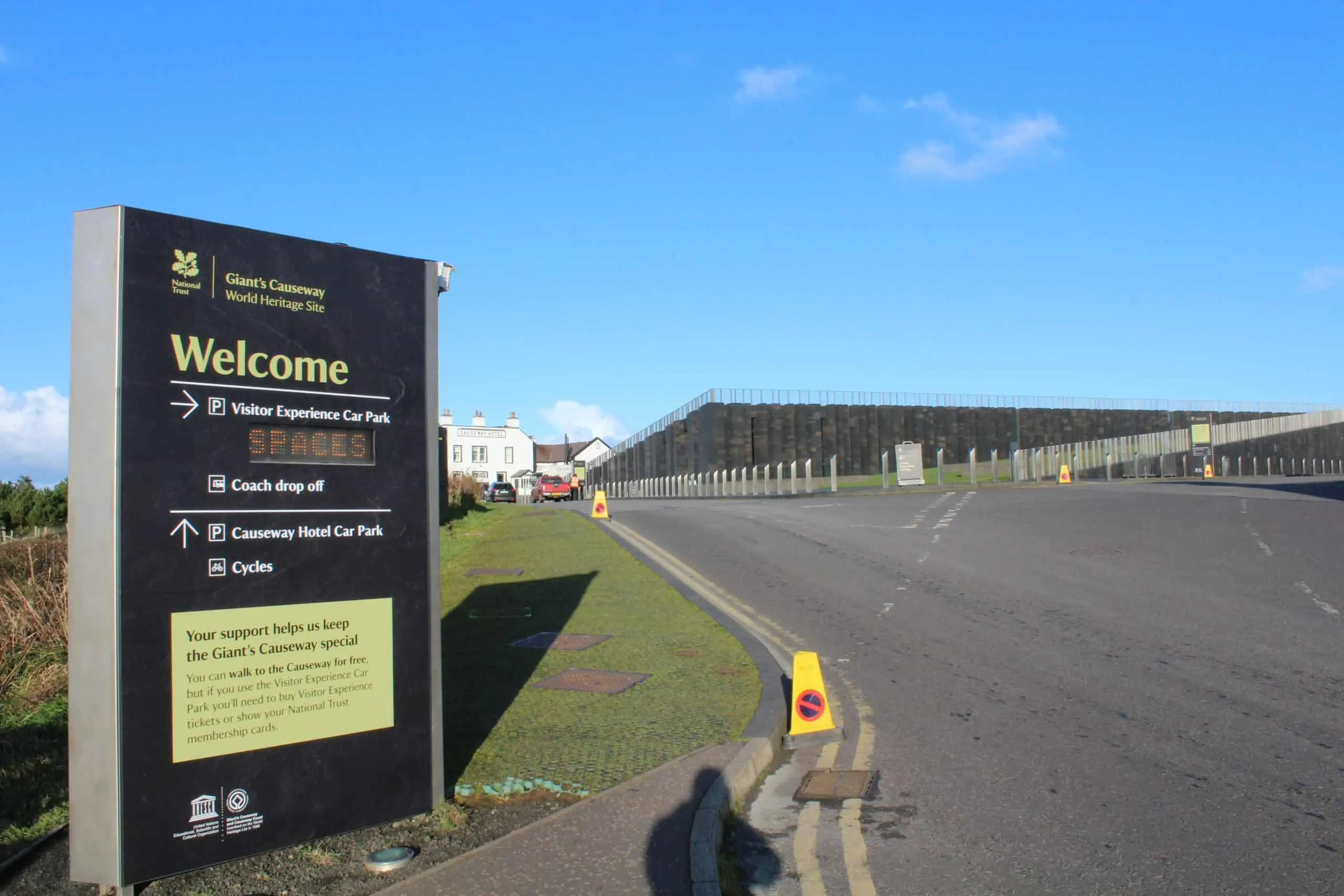
As visitor numbers grew through the twentieth and twenty-first centuries, protection of the site became central. Heritage designations, careful visitor management, and ongoing monitoring now guide how access and preservation are balanced. The goal is not to freeze the landscape, which naturally evolves, but to protect its integrity while allowing people to experience it meaningfully.
Conservation here includes trail maintenance, habitat care, erosion response, and interpretation that helps visitors understand both fragility and resilience. The Causeway survives because people continue to value it not only as scenery but as shared natural heritage worth passing on.
Landscape, weather & accessibility
The North Atlantic edge creates a fast-changing environment where cloud, sun, rain, and wind can rotate in a single afternoon. That variability is part of the place's character, but it also requires practical preparation. Surfaces may be wet or uneven, and exposed sections can feel significantly cooler than inland areas.
Accessibility improvements continue, with key facilities designed to support a broad range of visitors. At the same time, some terrain remains naturally challenging. Planning ahead, choosing suitable routes, and pacing your visit make a major difference to comfort and safety.
Festivals, culture & local rhythms
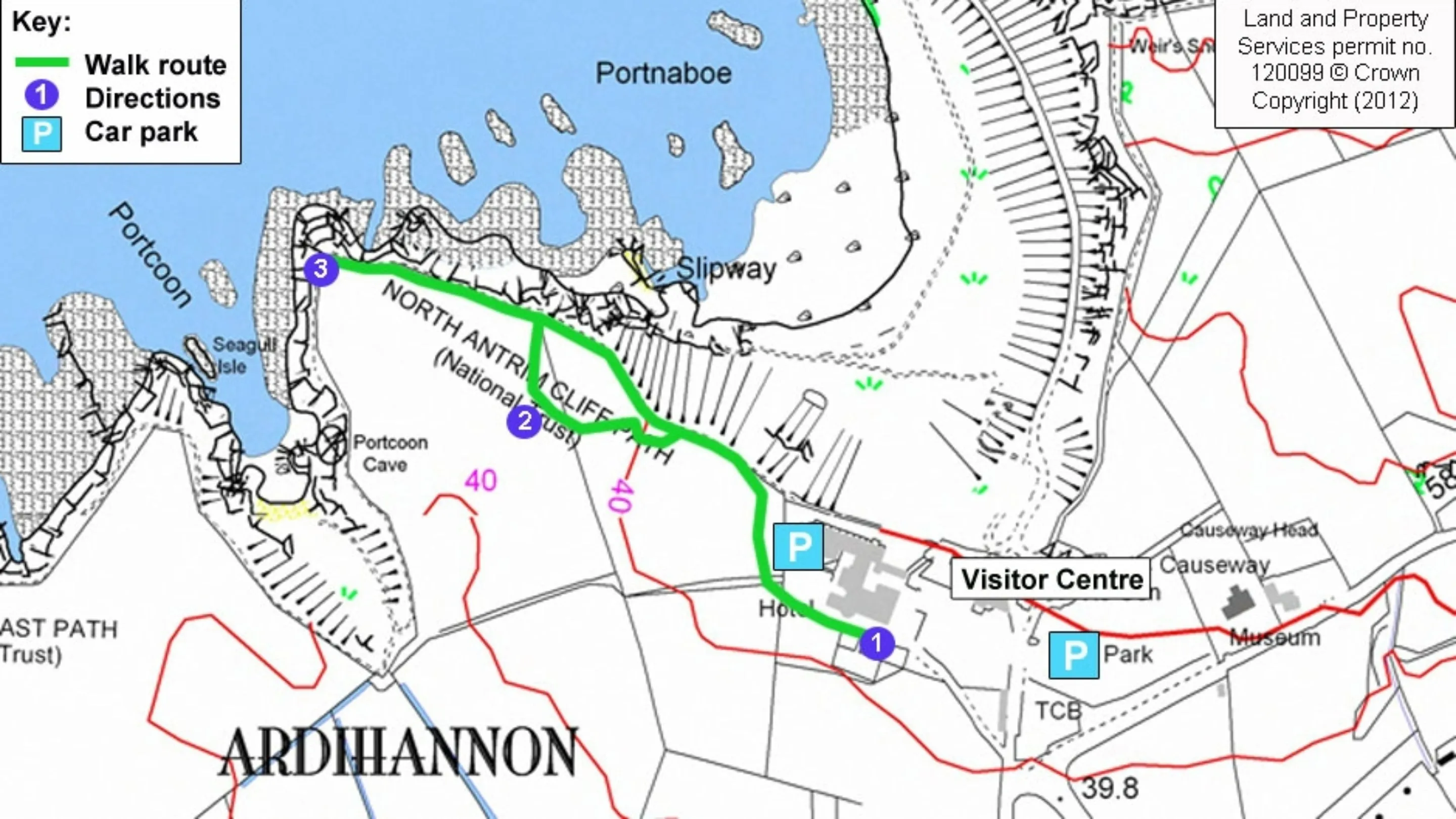
The Causeway region is not only a geological landmark but part of a living cultural landscape shaped by local communities, seasonal rhythms, and coastal livelihoods. Nearby towns host events, food traditions, music gatherings, and storytelling traditions that connect visitors to a wider regional identity.
Even outside formal events, the culture is visible in small details: accents and place-names, cafe conversations after windy walks, and the everyday hospitality of communities used to sharing remarkable scenery with newcomers. Taking time beyond the main stones often deepens the entire experience.
Tickets, passes & smart planning
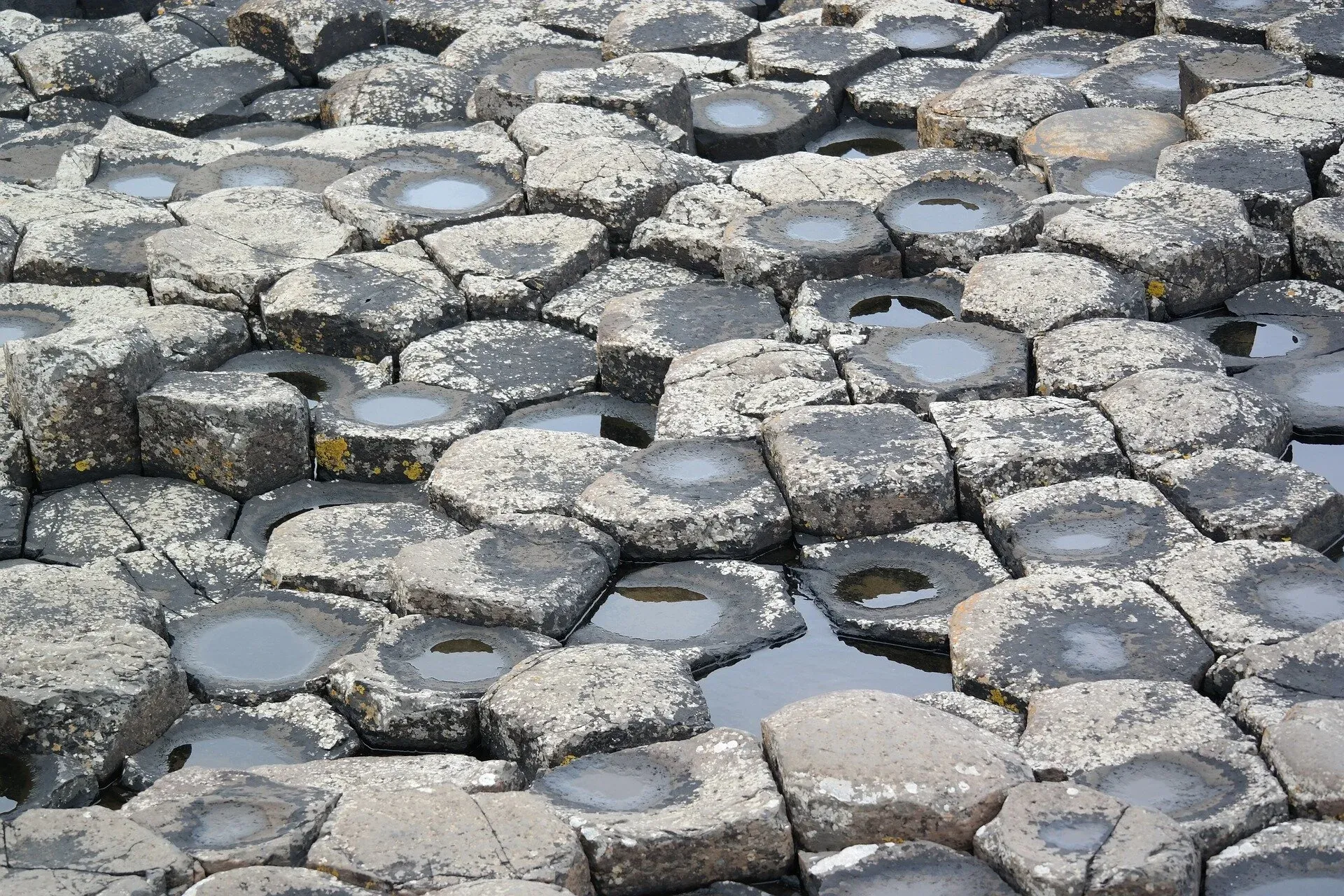
Good planning helps you enjoy the site rather than rush through it. Decide first whether you want independent flexibility or guided structure, then choose timings that suit weather windows and daylight. If photography matters, softer early or late light often gives better texture on the rock.
Build your day around realistic movement. The coast invites lingering, and the most memorable moments often happen between formal stops, when a cloud break lights the columns or a distant cliff suddenly clears. Leaving margin in your itinerary is one of the best upgrades you can give yourself.
Preserving heritage in a changing climate
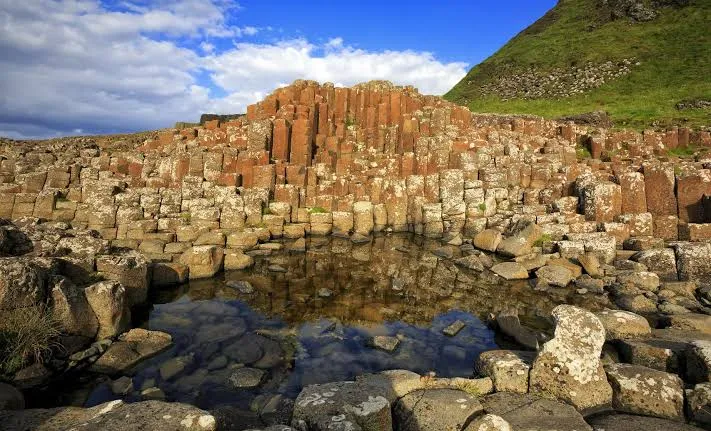
Like many exposed coastlines, Giant's Causeway faces long-term environmental pressures linked to changing storm patterns, sea dynamics, and ecosystem shifts. Ongoing scientific monitoring helps experts understand how these pressures interact with existing erosion processes.
Visitors play a role as well. Staying on marked paths where required, respecting barriers, and following local guidance reduce avoidable wear and support long-term preservation. Small choices, repeated by many people, matter at landscape scale.
Side trips & wider coastal context
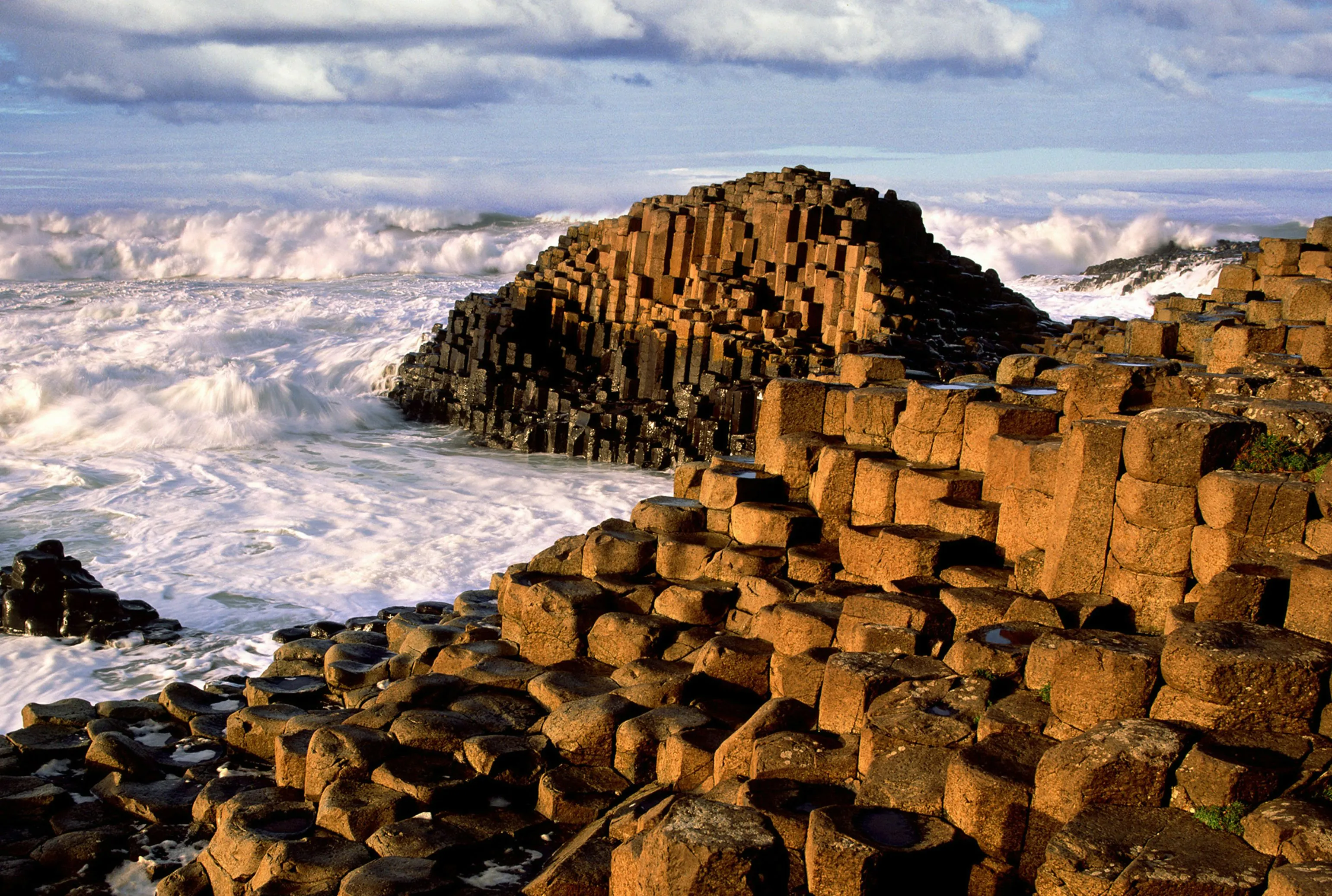
The Causeway gains depth when seen as part of a broader coastal network. Nearby clifftops, bays, rope-bridge viewpoints, and historical ruins show how geology, settlement, and seafaring history intersect across short distances. Pairing two or three nearby stops can turn a good visit into a truly layered one.
If time allows, finish with a quiet viewpoint away from the busiest path, where you can look back over the Atlantic and connect the day's pieces: volcanic history, mythic storytelling, and modern conservation living side by side.
Why Giant's Causeway still feels timeless
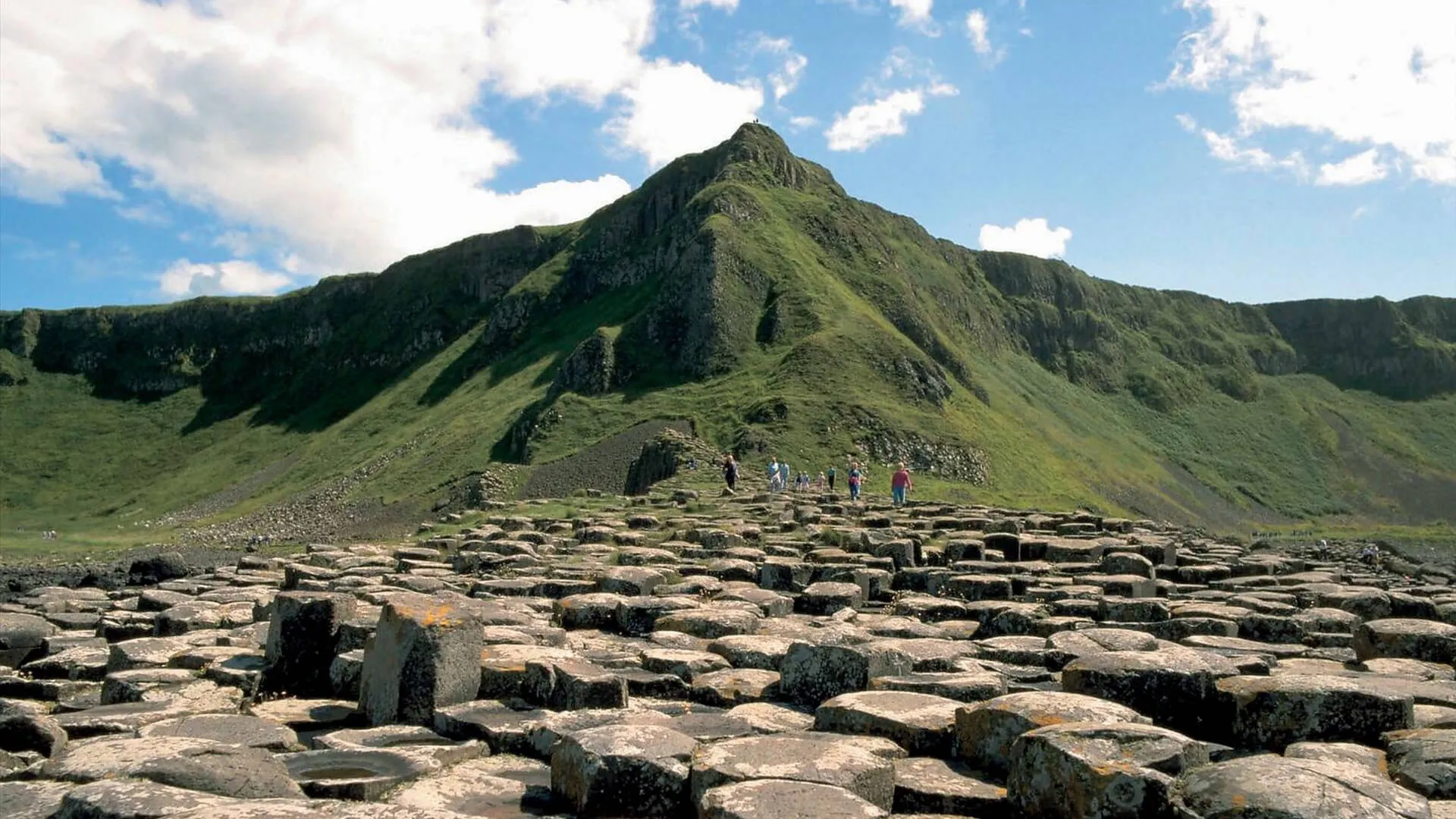
Many famous places lose mystery when you see them in person. Giant's Causeway usually does the opposite. The scale, sound, and texture of the coast make the experience feel larger than expected, and the mix of precise geometry with raw weather keeps it emotionally vivid.
In the end, that is the Causeway's lasting power: it welcomes both explanation and wonder. You can leave with a better grasp of volcanic science and still smile at the giant stories. Few destinations hold those two truths so comfortably at once.
Table of Contents
A coastline born from fire
Long before maps named this corner of County Antrim, immense volcanic activity transformed the region. Around sixty million years ago, during the Paleogene period, molten basaltic lava spread across broad surfaces and cooled in successive flows. What looks today like a carefully engineered stone terrace was, in origin, a violent natural process: fire meeting air, pressure releasing in stages, and rock contracting as heat escaped. Over vast stretches of time, those events produced the layered volcanic foundation of the coast and set the stage for the geometric forms visitors now recognize instantly.
Seen from a modern trail, the Causeway can feel almost architectural, but that sense of design emerges from physical laws rather than human planning. Cooling rock contracts, fractures, and organizes itself into polygonal columns, most famously hexagons, because that pattern efficiently distributes stress. The result is both technical and poetic: a shoreline where chemistry, temperature, and time collaborated to create one of the world's most iconic natural pavements.
How the basalt columns formed
The columns formed as thick lava flows cooled from the top and bottom inward, causing tensile stress that cracked the rock into repeating shapes. Although hexagons are the signature form, pentagons and heptagons also appear, reminding us that nature rarely works as a perfect grid. Column height and profile vary by location, and certain formations show dramatic step-like structures where different cooling rates and erosional patterns overlapped through time.
One of the most fascinating details is that the columns are not just a surface effect. They continue downward as part of deeper basalt structure, while wind, rain, and wave action gradually reveal and reshape the visible edges. In practical terms, every visit is slightly different: changing light, wet stone sheen, tidal movement, and seasonal vegetation all alter how the geometry reads to the eye.
Finn McCool and the giant's road
Alongside geology lives one of Ireland's best-known legends: the tale of Finn McCool, the giant hero who built a stone path across the sea toward Scotland to challenge his rival Benandonner. In one version, Finn's wife Oonagh outsmarts the rival by disguising Finn as a baby, convincing Benandonner that if the child is that large, the father must be enormous. Terrified, the rival flees and tears up the causeway behind him.
Whether told around kitchen tables, by local guides, or in children's books, the legend adds emotional texture to the place. It does not compete with scientific explanation; instead, it complements it by giving visitors a cultural language for awe. People may arrive for the basalt, but they often remember the Causeway through stories, voices, and the humor of a giant tricked by family cleverness.
First visitors and early accounts
By the seventeenth and eighteenth centuries, travelers, artists, and scholars began recording the Causeway in journals and sketches. Reaching the site was far less straightforward than today: roads were rough, weather could shut routes quickly, and local knowledge mattered. Yet the effort itself reinforced the destination's reputation. Those who arrived wrote with a mixture of disbelief and admiration, often describing the stones as too regular to be natural.
These early impressions helped spread the Causeway's fame beyond Ireland. Prints circulated across Britain and Europe, and the site became a touchpoint in growing debates about how landscapes form. In that way, Giant's Causeway entered both popular imagination and scientific discussion at nearly the same moment.
Scientific debate in the 18th century
During the Enlightenment, the Causeway became a stage for competing geological theories, especially arguments between Neptunists and Plutonists about the origins of rock. Some scholars believed basalt precipitated from ancient oceans, while others argued it came from volcanic processes. Sites like Giant's Causeway provided concrete evidence that could be observed, measured, and compared.
Over time, volcanic interpretations gained strength, supported by field observations from multiple regions with similar basalt structures. The Causeway's columns, once framed mainly as a curiosity, became important data in the broader development of modern earth science. Today, standing on those stones, visitors are walking across a landscape that helped shape the scientific method itself: observe closely, test ideas, revise conclusions.
Victorian travel and coastal tourism
In the nineteenth century, improved transport and changing leisure culture brought more visitors to the Causeway Coast. Rail links to nearby towns and the expansion of hospitality services made multi-stop coastal trips increasingly popular. Guidebooks began to standardize routes, viewpoints, and recommended timings, turning what was once an adventurous expedition into a more structured excursion.
Victorian travelers often combined natural interest with social ritual: promenades, sketching, letter-writing, and shared viewing points. Their habits helped establish the template still familiar today, a journey that blends scenic movement, narrative interpretation, and pauses for reflection. The modern visitor experience owes more to this era than many people realize.
Conservation and heritage protection
As visitor numbers grew through the twentieth and twenty-first centuries, protection of the site became central. Heritage designations, careful visitor management, and ongoing monitoring now guide how access and preservation are balanced. The goal is not to freeze the landscape, which naturally evolves, but to protect its integrity while allowing people to experience it meaningfully.
Conservation here includes trail maintenance, habitat care, erosion response, and interpretation that helps visitors understand both fragility and resilience. The Causeway survives because people continue to value it not only as scenery but as shared natural heritage worth passing on.
Landscape, weather & accessibility
The North Atlantic edge creates a fast-changing environment where cloud, sun, rain, and wind can rotate in a single afternoon. That variability is part of the place's character, but it also requires practical preparation. Surfaces may be wet or uneven, and exposed sections can feel significantly cooler than inland areas.
Accessibility improvements continue, with key facilities designed to support a broad range of visitors. At the same time, some terrain remains naturally challenging. Planning ahead, choosing suitable routes, and pacing your visit make a major difference to comfort and safety.
Festivals, culture & local rhythms
The Causeway region is not only a geological landmark but part of a living cultural landscape shaped by local communities, seasonal rhythms, and coastal livelihoods. Nearby towns host events, food traditions, music gatherings, and storytelling traditions that connect visitors to a wider regional identity.
Even outside formal events, the culture is visible in small details: accents and place-names, cafe conversations after windy walks, and the everyday hospitality of communities used to sharing remarkable scenery with newcomers. Taking time beyond the main stones often deepens the entire experience.
Tickets, passes & smart planning
Good planning helps you enjoy the site rather than rush through it. Decide first whether you want independent flexibility or guided structure, then choose timings that suit weather windows and daylight. If photography matters, softer early or late light often gives better texture on the rock.
Build your day around realistic movement. The coast invites lingering, and the most memorable moments often happen between formal stops, when a cloud break lights the columns or a distant cliff suddenly clears. Leaving margin in your itinerary is one of the best upgrades you can give yourself.
Preserving heritage in a changing climate
Like many exposed coastlines, Giant's Causeway faces long-term environmental pressures linked to changing storm patterns, sea dynamics, and ecosystem shifts. Ongoing scientific monitoring helps experts understand how these pressures interact with existing erosion processes.
Visitors play a role as well. Staying on marked paths where required, respecting barriers, and following local guidance reduce avoidable wear and support long-term preservation. Small choices, repeated by many people, matter at landscape scale.
Side trips & wider coastal context
The Causeway gains depth when seen as part of a broader coastal network. Nearby clifftops, bays, rope-bridge viewpoints, and historical ruins show how geology, settlement, and seafaring history intersect across short distances. Pairing two or three nearby stops can turn a good visit into a truly layered one.
If time allows, finish with a quiet viewpoint away from the busiest path, where you can look back over the Atlantic and connect the day's pieces: volcanic history, mythic storytelling, and modern conservation living side by side.
Why Giant's Causeway still feels timeless
Many famous places lose mystery when you see them in person. Giant's Causeway usually does the opposite. The scale, sound, and texture of the coast make the experience feel larger than expected, and the mix of precise geometry with raw weather keeps it emotionally vivid.
In the end, that is the Causeway's lasting power: it welcomes both explanation and wonder. You can leave with a better grasp of volcanic science and still smile at the giant stories. Few destinations hold those two truths so comfortably at once.